


 English
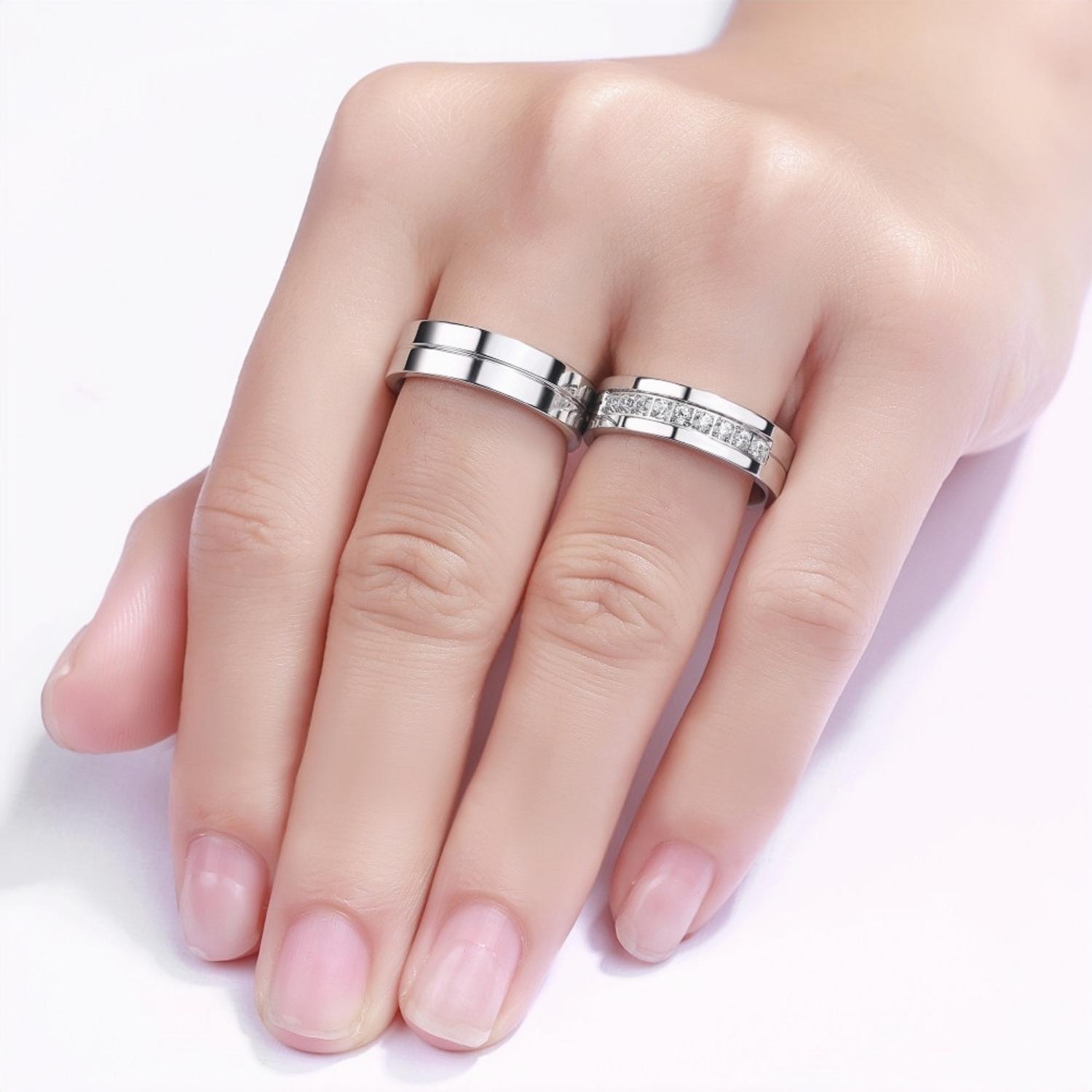
It is clear that buying simulated couple matching jewelry can be a costly investment. The price of the stones and the quality can range from $6,000 to upwards. It's not surprising that so many people find buying a simulated diamond jewelry overwhelming and confusing, especially when they only have this option. It's not as difficult as you might think. With a few tips on diamond shopping, you can shop with confidence and walk away with a stunning stone that suits your budget and style. Our diamond buying guide is below.
How to buy a diamond couple necklaces
When buying diamonds the budget is one of the most critical factors. However, you can get the best value by researching natural diamonds versus simulated lab-grown diamonds as well as other qualities you should look for. You can use our diamond buying tips to help you find the perfect stone within your budget.
Understanding the 4Cs in Diamond matching promise rings Quality
A diamond's quality is determined by the four characteristics. These are assessed and graded by highly trained professionals. The 4Cs are the cut, color and carat of diamonds. The Gemological Institute of America's (GIA) ranking system is used to evaluate each of these factors. This is the accepted standard for diamond grading. The GIA produces a report that notes the value of each diamond based on the graders' assessment. What you need to know about the 4Cs.
Cut:
How diamonds are cut is perhaps the most important factor to consider before purchasing a stone. It will have a direct impact on their ability to shine and sparkle. The cut quality of a diamond can make even the best-quality stone appear dull and dark. The cut is the hardest of the 4Cs to evaluate. The cut grade of a stone is calculated using a formula that takes into account the weight of the stone in relation to its diameter, girdle width, symmetry of facet arrangement and polish quality. The GIA's cut grading system is designed to evaluate standard round diamonds in color grades ranging between D and Z. However, it can be adapted for other shapes. The six grades are Ideal (the highest), Excellent (second best), Very Good (good), Fair (fair) and Poor.
Color:
After determining the diamond's cut grade, it is important to take into consideration its color grade. Other stones can have a yellowish or brown tint, even though chemically pure diamonds are colorless. The GIA scale of color grading begins with grade D which represents a colorless diamond. It continues up to grade Z with each letter denoting progressively stronger hues. A skilled grader compares a diamond to master stones that have been previously rated according to color. In an attempt to recognize that some grades have similar appearances and values, the GIA has grouped these 23 grades into 5 categories. Colorless, Near Colorless and Faint are the five categories.
Carat:
Contrary to popular belief, a carat does not measure the size of a stone. It is a true measurement of its weight. Carat, along with shape and cut, has a direct effect on the visual size of diamonds. A 1-carat diamond in an oblong form, such as an emerald or oval diamond, can appear larger than a round 1-carat diamond. To help customers better understand the size of a diamond, the GIA certificate of a diamond will often list the carat weight of the stone as well as a measurement in millimeters.
The carat measurement directly affects the price of a diamond. Prices will rise exponentially with each increase in carat. A 2-carat stone would be more expensive than two diamonds of equal quality. A larger diamond is usually priced at four times more than a diamond of the same weight.
Clarity:
Clarity is often considered to be the least important factor when buying a diamond. It refers to the imperfections on and within the stone. No diamond, whether it is natural or laboratory-grown, will be free from flaws. When determining the clarity of a diamond, the assessment is based on the size, locati0n, relief and nature of flaws visible internally and those that are found externally. The GIA scale of clarity consists eleven distinct grades, divided into six categories: Flawless(FL), Internally-Flawless (IF), Very very Slightly Included (VVS), VERY Slightly included (VS), Slightly included (SI), and Included(I).
Working with a Professional Trained in the Field
It's crucial to buy diamonds from a qualified professional you trust. This could be a jeweler, gemologist, or other trained professional. Choose this person as carefully as you would any other professional, such as a lawyer, doctor or jeweler. A good person to work will have the right training, be open to questions and be able to communicate clearly in simple language. You should never feel misinformed, swindled or belittled by them. You should establish a relationship with your local gemologist or jeweler so that you can discuss your wants, needs and concerns in a relaxed and open manner.
When searching for a diamond expert, it is best to find someone with credentials such as a GIA Graduating Gemologist (GG), or an Applied Jewelry Professional. Your professional should have received training from an internationally recognized and accredited program. The GIA offers a retailer search so that you can find a local jewelry store with GIA certified diamonds and GIA trained staff.
You can ask for a copy of the grade report
A scientific, unbiased grading report can provide you with more information about the diamond that you're purchasing. It will also serve as proof of its quality. This is a key component to determining if the diamond you are buying is genuine and how its different qualities work together. These reports are usually from the GIA, or other recognized associations, and include a reference number which you can verify with the grading organisation. A grading report includes more than just the 4Cs. It will confirm the composition of the stone, any natural or lab-grown alternatives, as well as disclose any treatments that may have been performed to change its color or clarity.
You may not be able to detect some differences in diamond quality without lab verification. Always insist on a diamond grading report when you buy a diamond. You should walk away if your seller cannot provide this information.
 Tiếng Việt